What Happens When Technical Debt Vanishes?
Technical debt removal's impact on productivity metrics is analyzed, arguing why business-value-centric measurement outweighs simple metric improvement.

This research analyzes the impact of eliminating technical debt via thought experiments. Results show that while specific debt removal temporarily improves metrics, organizations inevitably regress to their productivity baseline by introducing new debt to create higher value.
Introduction
One of the primary reasons many enterprise AI projects fail at the production stage is the accumulation of technical debt and the underestimation of the operational costs required to manage it. Leaders often expect that ‘clearing’ technical debt through the introduction of automation tools or the latest frameworks will lead to a dramatic surge in development speed.
However, the history of software engineering demonstrates that simply eliminating debt does not directly translate to increased productivity. This analysis examines, through the perspective of Google researchers, the paradoxical impact that removing technical debt has on an organization’s operating model and productivity measurement methods.
Core Thesis of the Source Paper
This material is a thought-experiment-based analysis written by Google’s Engineering Productivity Research team, examining the changes in developer productivity and related metrics when specific categories of technical debt magically vanish. The authors define technical debt as a decision to accept future correction costs or friction in exchange for realizing immediate business value, explaining it through the concepts of ‘Principal’ and ‘Interest’.
The researchers argue that while the disappearance of technical debt reallocates engineering time toward more valuable work (Greenfield Development), Jevons Paradox dictates that organizations will attempt to do more work with the same headcount or develop more complex software. Consequently, they hypothesize a ‘regression phenomenon’ where subjective surveys or objective maintenance overhead metrics improve temporarily before rising again, as satisfaction returns to original levels alongside rising expectations for code quality.
Ultimately, the authors suggest that business-value-linked metrics, such as Revenue per Engineer (RpE), are more suitable for measuring the actual effectiveness of technical debt management than simple code output metrics.
Executive Key Takeaways
- 1 1. [Productivity Regression Hypothesis] The removal of technical debt shifts engineering resources toward high-value work, but this inevitably triggers new forms of technical debt, causing productivity metrics to regress to the original baseline.
- 2 2. [Shift in Performance Metrics] The actual ROI of resolving technical debt should be evaluated through metrics that combine engineering efficiency with business value (e.g., RpE), rather than simple code quality or reductions in maintenance time.
- 3 3. [Automation-Abstraction Cycle] When AI-based automation tools completely eliminate a specific category of technical debt, how is the 'optimal level of technical debt' an organization can sustain redefined?
Why Technical Debt Removal Does Not Lead to Permanent Productivity Gains?
First, due to the ‘regression phenomenon’ that occurs after temporary metric improvement. According to the researchers’ analysis (Figure 1 and Figure 2 of the source paper), when specific technical debt is removed, maintenance overhead initially decreases and subjective satisfaction rises. However, engineers use this reclaimed time to develop more complex and challenging new features, introducing new forms of technical debt in the process. Consequently, general maintenance metrics tend to return to their original levels.
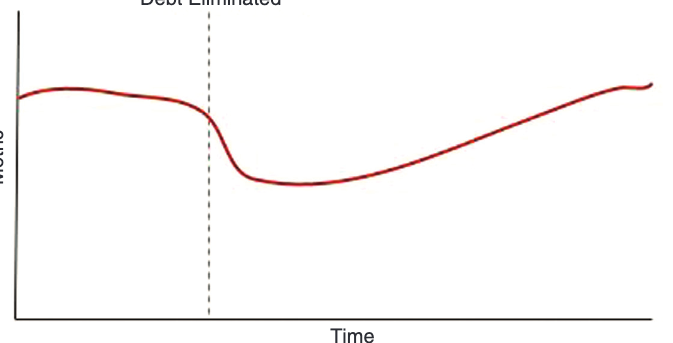
Second, due to the formation of a ‘New Normal’ driven by rising expectations. Even if overall code quality improves through the introduction of quality tools, the standards and expectations engineers hold for ‘good code’ rise accordingly. As a result, perceived satisfaction with code quality converges to a level similar to before the improvement; this should be interpreted not as a failure, but as a signal of success where the organization’s baseline has been upwardly adjusted.
Third, due to the gap between measurement metrics and actual value creation. Traditional productivity metrics, such as Pull Request throughput or Lines of Code (LOC), measure only the ‘quantity’ of work and fail to capture changes in the ‘nature’ of the work. Even if engineers spend time on high-value design work instead of simple fixes due to the removal of technical debt, total workload metrics may remain unchanged. This suggests that incorrect metric settings can obscure the actual achievements of resolving technical debt.
It is dangerous to interpret the saving of engineering time through technical debt removal simply as ‘headcount reduction’ or ‘idle time.’ According to Jevons Paradox, as the efficiency of resource utilization increases, the total consumption of that resource tends to increase.
In engineering organizations, efficiency gains lead to new demands for building more complex systems and faster feature releases, which in turn generate new technical debt. Therefore, the goal of debt removal should be set not as ‘zero debt,’ but as ‘maximizing value within a manageable level of debt.’
The Automation-Abstraction Cycle and Technical Debt
The evolution of software engineering is a repeated process where a tool that solves a specific problem is introduced, causing that problem to no longer be perceived as debt and instead becoming part of a new standard. The researchers define this as the Automation-Abstraction Cycle, emphasizing that the removal of technical debt serves as a catalyst to raise the level of engineering abstraction beyond temporary productivity gains.
This cycle operates through a four-stage circular structure. First, a common, shared problem experienced universally within the community is identified. Second, experts in the field propose efficient solutions and establish them as best practices. Third, these practices are gradually codified into tools, languages, or frameworks and internalized within the system. Finally, developers operating at a higher level of abstraction perform tasks more quickly, which inevitably leads to the construction of more complex software and the encounter of new forms of problems.
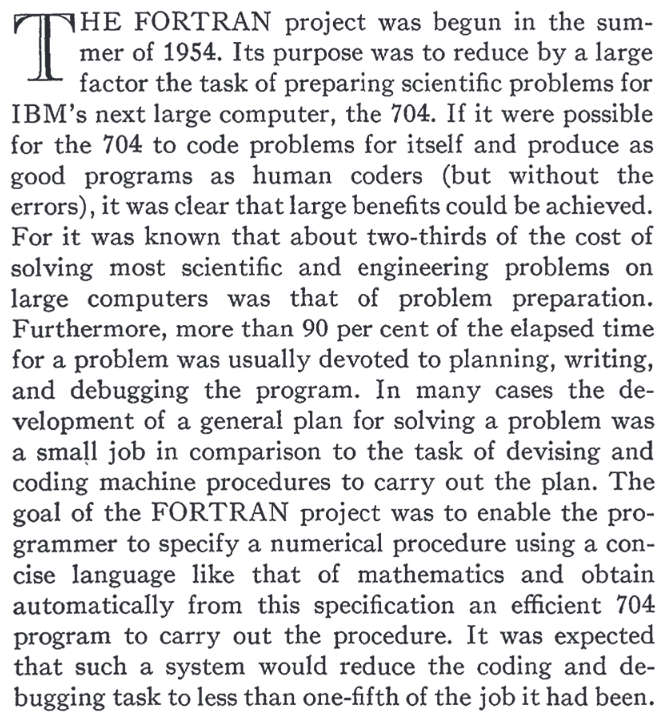
The researchers cite the emergence of FORTRAN as a historical example of this mechanism. According to their analysis (Figure 4 of the source paper), FORTRAN was called an ‘Automatic Coding System’ at the time of its introduction and brought about a radical innovation in productivity. While calling FORTRAN ‘automatic coding’ seems awkward today, it was a critical step at the time in reducing cognitive load by abstracting low-level tasks that were previously handled manually. This is the same evolutionary context as modern auto-formatters reducing lint errors—which were once management targets—to trivial issues.
Ultimately, the introduction of a ‘magic tool’ to remove technical debt does not simply mean a reduction in maintenance time. It is an expansion of the abstraction layer that enables engineers to handle higher levels of complexity, and simultaneously acts as a catalyst for creating new dimensions of technical debt. Therefore, expecting the complete disappearance of technical debt is a dangerous misjudgment that misunderstands the inherent evolutionary path of software engineering. True achievement lies not in zero debt, but in expanding the difficulty of problems the organization can solve and the scale of business value through the automation-abstraction cycle.
Financial Metaphor of Technical Debt: Principal vs. Interest
Technical debt is a set of design or implementation shortcuts chosen to realize business value quickly in the short term, but which increase or preclude the possibility of future changes in the long term. The researchers define this by analogizing it to financial debt, dividing it into two core elements: ‘Principal’ and ‘Interest’.
First, the Principal refers to the accumulated technical debt itself. Repaying it means removing the root cause of the debt. For example, successfully completing a large-scale migration across the system to completely replace a legacy architecture falls into this category. Repaying the principal fundamentally blocks the payment of future interest costs associated with that debt.
Second, Interest refers to the continuous incidental costs and friction that arise because technical debt exists. A typical example of paying interest is when a preventable defect occurs due to a lack of test code, requiring additional engineering resources to resolve. Paying interest is the act of responding to the outcomes of debt and performing stopgap maintenance without completely removing the debt; over time, this creates a vicious cycle where complex code is layered around the debt, further increasing the cost of repayment.
This distinction provides a sophisticated analytical framework for engineering capacity allocation. When introducing debt, an organization must not only consider current convenience but also estimate the expected size of the principal, the applicable interest rate, the repayment period, and the immediate business value gained. In other words, the introduction of technical debt is a decision-making process under uncertainty; by clearly recognizing the correlation between principal and interest, management can shift from simple ‘code cleanup’ to ‘strategic resource investment.’
Consequently, technical debt management culminates in a trade-off decision: whether to remove future costs by repaying the principal or to secure time-to-market by enduring a certain level of interest. If an organization misunderstands this and becomes consumed by only paying interest, system complexity will increase exponentially, leading to a high risk of ‘technical bankruptcy’ where repaying the principal becomes impossible.
The ‘Wicked Problem’ of Productivity Measurement and the RpE Metric
Quantifying productivity in its true sense within software engineering is an extremely difficult task, which the researchers define as a ‘Wicked Problem.’ This is not due to a lack of measurement tools, but because the concept of productivity itself is entwined with multi-layered variables and contexts, making it difficult to capture with a single metric. In particular, even if the removal of technical debt leads to productivity gains, traditional metrics tend to regress to previous baseline levels due to Jevons Paradox and rising expectations. Therefore, there is a limitation in proving the actual effects of engineering efficiency improvements through simple workload measurements.
To overcome this measurement challenge, the researchers propose Revenue per Engineer (RpE) as an alternative metric. RpE is a metric that simultaneously measures engineering efficiency and the ability to create business value, making it useful for visualizing how technical debt management contributes to actual corporate profitability. Theoretically, if engineering effort spent on maintenance and rework is reduced through automation tools or AI and reinvested into new project development directly linked to revenue, RpE will rise. This serves as a metric showing the path through which the clearing of technical debt transcends simple code cleaning to translate into business performance.
However, RpE cannot be an absolute answer and has limitations that require serious caution during interpretation. First, RpE fluctuates significantly based on external factors such as business strategy, product direction, and corporate operational efficiency. For example, even if an engineering organization operates with extreme efficiency, RpE will inevitably be low if revenue drops due to failed business strategies or intensified market competition. Conversely, RpE may appear high if a company holds a monopoly market position or overwhelming product competitiveness, even if the organization is experiencing friction near the point of collapse due to technical debt.
Ultimately, while RpE can be a reasonable indicator of the overall efficiency of an engineering business unit, using it as a scale to evaluate the productivity of individual engineers or teams is a very dangerous judgment. The true value of engineering productivity must be measured in precise alignment with business outcomes, while acknowledging that the figures can be distorted by external business variables. The researchers emphasize that understanding this complex context is key to accurately diagnosing the performance of technical debt management.
Technical Debt Management and Performance Measurement Framework Checklist
- Distinction of Metric Nature: Are current productivity metrics distinguishing between simple output (activity volume) and outcome (business value)?
- Reflection of Upward Expectation Adjustment: If satisfaction stagnates after code quality improvement, is this interpreted not as failure, but as a result of the organization’s quality baseline rising?
- Resource Reallocation Strategy: Is there a concrete plan for how to allocate engineering capacity reclaimed by resolving technical debt to high-value work (Greenfield Development)?
- Introduction of Business-Value-Linked Metrics: Are complementary metrics that can simultaneously measure efficiency and business performance, such as Revenue per Engineer (RpE), being considered?
Implications for Preventing ‘Technical Stranding’ in Enterprise AI Projects
The core insight of this analysis is that technical debt should be viewed not simply as an ‘evil to be removed,’ but as a ‘strategic asset exchanged for business value.’ Particularly in AI projects, specialized forms of debt arise, such as data pipeline complexity or model version management; attempting to eliminate these entirely can incur excessive engineering costs, deteriorating ROI.
What matters is the decision on ‘Risk Appetite’ regarding which debts to repay and which to maintain. If it is impossible to magically eliminate all debt, a strategy is needed to selectively resolve debts with high ‘interest’ that occur at points of high business impact. Furthermore, it must be clearly communicated to management that AI automation tools assisting in code writing do not immediately translate into a permanent rise in productivity metrics, guarding against hasty evaluations based on such metrics.
Principles for Securing Sustainable Engineering Productivity
To understand the paradox of technical debt and achieve actual organizational growth, the following principles are applied:
- Value-Centric Debt Management: When deciding whether to clear technical debt, quantitatively compare the cost of removal with the business value to be created by the reclaimed engineering capacity.
- Diversification of Metrics: Beyond simple efficiency metrics like LOC or throughput, measure the actual utility of technical debt management through high-level metrics linked to business performance.
- Acceptance of the Abstraction Cycle: Recognize the regression of metrics following the introduction of automation tools as a natural evolutionary process, and focus on cultivating organizational capability to handle higher levels of abstraction and complexity.
Further reading
- Practical Considerations for MLOps Practices: Why Tool Adoption Does Not Prevent Failure
- Why MLOps Maturity Models Are Necessary: Why Best Practice Lists Fail to Transform Organizations
- Technical Debt in the AI Era
References and Source Analysis Materials
What Happens When Technical Debt Vanishes?
Authors: Ciera Jaspan, Collin Green
This research briefing was written from the source paper with the help of AI tools (AI Research Agent · MLOps, AI Research Agent · Strategy). Reviewed by Jay PARK, who is responsible for it.
Read more
Opinions & Columns ·
Prerequisites for AX Success: Moving Beyond Patchwork to Process Modernization

Tech & MLOps ·
ADAZOR: Hypothesis Testing for Concept Drift Detection in Machine Learning
Tech & MLOps ·
Trust Must Survive Deployment: The Continuous Assurance Lifecycle for Adaptive AI Systems

Tech & MLOps ·
AI Safety and Security Technical Debt in AI-Enabled System Engineering

